

Support Canadian History Ehx with a donation at https://www.buymeacoffee.com/craigU
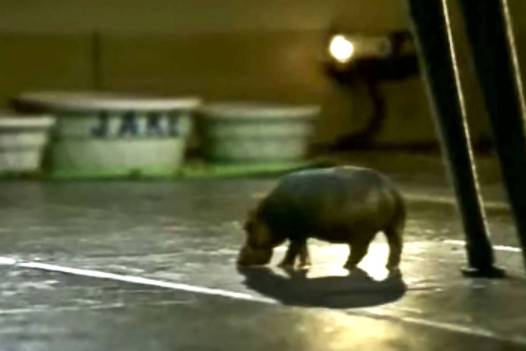
Narrated in the style of a Hinterland Who’s Who, a fictional animal found “throughout Canada, and the eastern United States” is shown foraging for the crumbs of peanut butter toast in a kitchen, escaping from a house cat, and making a nest from lost mittens to go to sleep…
In just a minutes the tiny semiaquatic mammal, originally native to sub-Saharan Africa stole the hearts of the nation and became a pop culture phenomenon
Over twenty years later that little river horse we all fell in love with made its triumphant return and a new generation was introduced to its charm.
I’m Craig Baird and this is Canadian History Ehx.
The North American House Hippo was first introduced in May of 1999,by Concerned Children’s Advertisers, The Canadian non-profit organization based in Toronto, was founded in 1990 . It produced over 30 public service announcements, covering topics such as drug abuse, conformity, self-esteem, and bullying with the goal of reaching children between the ages of eight and 12.
In order to educate children about the importance of critical thinking and to teach them not to accept what they see on TV at face value they were inspired to create a PSA in the style of Hinterland’s Who’s Who.
Hinterland Who’s Who were television announcements, or vignettes first commissioned in 1962 by the Canadian Wildlife Service, as a way to generate interest in Canada’s wildlife and broadcast during commercial breaks
The vignettes brought native wildlife into living rooms across the country.
In the original announcements, distinctive flute music opens the ad, and is accompanied by the low-key style of the narrator, John Livingston (originally the executive director of the Canadian Audubon Society), describing the animal over footage of it taken in the wild.
The vignettes ended with a message for viewers to contact the Canadian Wildlife Service for additional information.
The wildlife videos first started airing in 1963 and continued into the 70s, 80s. Of course by 1999 they served as inspiration for none other than the House Hippo.
In the ad by the Concerned Children Advertisers, The House Hippo is described as being found across Canada and in parts of the eastern United States, as the cute little hippo is seen snuggling into dryer lint for a nap in a typical Canadian home.
Siobhan Dempsey was one of the writers at Spin Productions, the company that came up with the the House Hippo and she said the concept was like capturing lightning in a bottle
Her and Malcome Roberts were working on the project when he said how about a tiny animal that lives in your house? because He had a son at the time and thought it might be kind of magical. The hippo was just the funniest animal they could think of, and yet somehow the most plausible.
To them a giraffe or moose just seemed too fake somehow
So how did they make a 3,500 lbs animal from Africa into pocket-sized, chip-eating, cat-scaring wonder of our time?
To get the look just right the team at Spin was adamant that real images of real hippos be used, so the hippos in the PSA were taken from stock footage compiled from a number of suppliers. Spin executive producer Lisa Batke said it was somewhat difficult to amass enough usable footage for the just over a minute spot because at the time there wasn’t a lot of footage of hippos on land.
Each of the hippos featured in the spot were of different colors – some brown, some grey, some even appeared to be a shade of blue.
They were all composited to match one so that it looked like it was just one hippopotamus being used in the spot.
Another concern was lighting. Much of the usable footage collected by Spin’s suppliers was of hippos in daylight, so compositing was done to make the hippo shadier and darker (because House Hippos only come out at night).
All of the interior shots were shot in a Toronto home and there are instances where the hippo interacts with objects in the house, for example, nudging a piece of crumpled paper with its nose.
Towards the end of the spot, the House Hippo retires for the evening, wading into its nest in a closet. As it walks into the nest, the nest moves under the hippos weight.
Spin’s creative director on the spot, Rob Jones, said that to achieve this the crew set up a little rig of some wires to pull on the nest to make it look like the hippo was rustling. They then had to synch that up to make it look like the hippo was nestling down into it, and it took a bit of time to get all of the sizing right.’
Every detail was taken into consideration to make the hippo as believable as possible and that effort had a surprising effect on the PSA’s target audience.
When the House Hippo first appeared on screens across Canada, many of the young children who saw the commercial believed that house hippos were real, and those who knew they weren’t, wished they were.
Before long, its fate as a Canadian as an icon was sealed,
That was something that surprised writer Siobhan Dempsey.
She said it was shocking because the spot “didn’t receive a ton of attention at the time, it didn’t win industry accolades and it didn’t make us famous. It’s only now that the kids who saw the ad are online and in advertising that we’re getting the impact of it. It was a labour of love to get it made for almost nothing and we loved it personally, but we had no idea it would be so beloved.”
MediaSmart is a Canadian non-profit organization based in Ottawa, that focuses on digital and media literacy programs and resources. Their Executive Director Ann Hill tried to explain the obsession with the House Hippo as a combination of nostalgia and our obsession with cute, small things.
In an interview she said “Why hippos? Why do we have a fondness for hippos? There’s something about them that’s cute. Its the idea of taking this giant, enormous creature and turning it into something really cute and small. It’s just light-hearted and fun and uniquely Canadian. It is a wonderful way to communicate a serious message.”
Twenty years after the House Hippo first appeared on television screens, it returned
This time the focus was on media literacy and social media.
Our favorite little hippo appeared to remind us that we all have a responsibility to make sure something’s true before we share it online.. It was released as part of a campaign by Media Smarts called Break the Fake
The House Hippo is officially entrenched as piece of Canadiana, and its such an important part of our childhood and youth that Facebook groups unrelated to the campaigns have been created that show people finding their house hippo and putting up pictures of a small hippo ornament or toy, sometimes bedazzled, in various places in their home.
The House Hippo has also inspired TikToks, and even has a page on Urban Dictionary.
Not to mention there’s a band called House Hippo that honours the animal that we all loved, and all hoped was real enough to find in our own homes.
You can even by hand-made House Hippos, house hippo art prints, t-shirts and much more.
That’s the end of the story of The House Hippo and how the little fictional creature engrained itself into Canadian story… but there’s one more fun fact you should know about..
Possibly one of the weirdest things to do with the House Hippo that I found was a series of classified ads that were printed in the Whitehorse Daily Star in October and November 2002, which stated, quote:
“Looking for a male house hippo, eight months to one year to breed with my female house hippo.”
It seems like Canadians across the country still want a house hippo of their own and the obsession is still alive and well today. Just a month ago, a new Reddit thread was started to remind Canadians of the mythical beast.
Naturally, Canadians geeked out in conversation, and had nothing but nice things to say about our favorite little water horse.
(PAUSE MUSIC TRANSITION)
Thank you for joining me on Canadian History Ehx.
Information for this episode comes from CBC, Wikipedia, Fresh Daily, Playback Online.
This show is researched, produced, and written by me Craig Baird with the help of producer Dila Velazquez
Audio design and production by Rob Johnson
If this is your first time listening and like what you heard, please take a moment and give us a five star review to help other people find these amazing stories… and there are so many for you can sink your teeth into.
We love hearing from you! So if you have a show topic you want me to cover email me at….
Or stop by my website and social media… I’ll include those in the show notes…
Until next time… I’m Craig Baird and this is Canadian History Ehx.
Information from CBC, Wikipedia, Fresh Daily, Playback Online


